
How Crypto Investigators Track Wallets and Blockchain Transactions
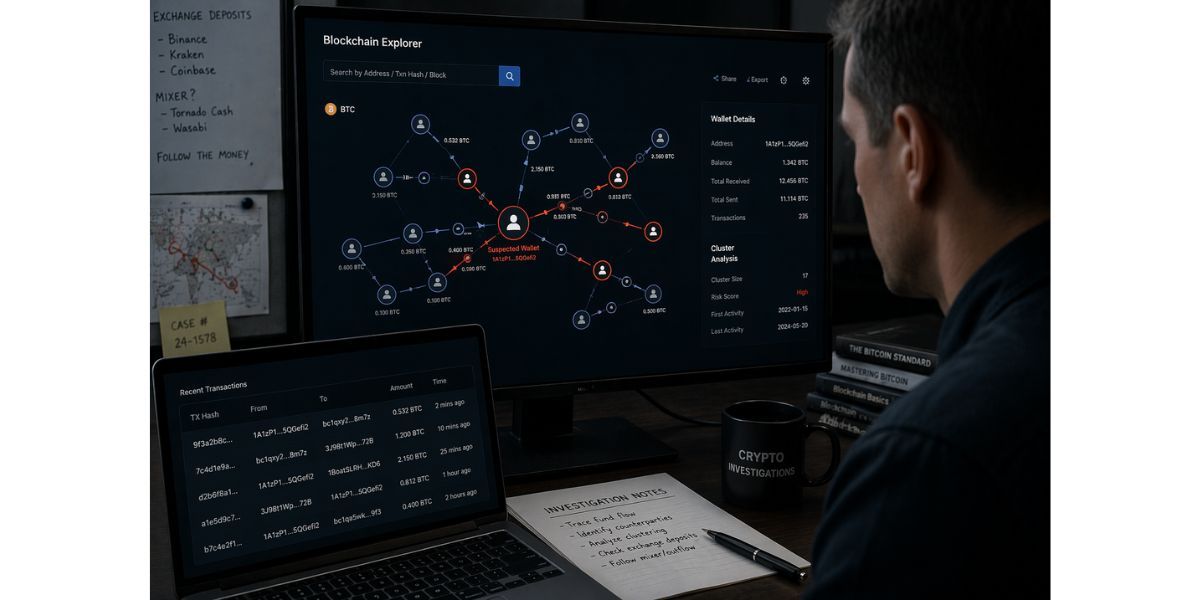
The rapid growth of cryptocurrencies has changed the global financial environment. While digital assets such as Bitcoin and Ethereum offer decentralized and secure payment systems, they have also attracted cybercriminals who misuse them for scams, fraud, ransomware, and money laundering. As a result, cryptocurrency investigation has become a critical field in modern digital forensics. Law enforcement agencies, cybersecurity professionals, and blockchain analysts now use advanced tools and technologies to trace crypto transactions, identify suspicious activities, and track stolen digital assets.
Understanding how investigators conduct crypto tracing helps individuals, companies, and business owners appreciate the transparency of blockchain technology and the efforts made to fight against crypto-related crimes.
Understanding Blockchain Transparency
One of the biggest misconceptions about cryptocurrency is that it is completely anonymous. In reality, most blockchain networks are pseudonymous rather than anonymous. This means that transactions are recorded publicly, but the identities behind wallet addresses are not immediately visible.
Every cryptocurrency transaction is stored on a public blockchain ledger, which includes important details such as:
- Sender wallet address
- Receiver wallet address
- Transaction amount
- Date and time of the transaction
- Transaction hash or ID
Because this information is permanently stored and publicly accessible, investigators can analyze the data to track crypto transactions and follow the movement of funds across different wallets.
This transparency is one of the reasons why cryptocurrency investigations have become more effective over time.
The Basics of Crypto Tracing
Crypto tracing refers to the process of analyzing blockchain transactions to determine the path of cryptocurrency funds. Investigators trace how funds move from one wallet to another until they reach exchanges, services, or individuals.
The process typically involves:
Identifying the suspicious wallet address
Tracking all outgoing and incoming transactions
Mapping the movement of funds across wallets
Identifying services or exchanges used by criminals
By analyzing transaction patterns, investigators can build a financial trail that leads to the people responsible for illegal activities.
Blockchain Analysis Tools Used by Investigators
Modern cryptocurrency investigation relies heavily on advanced blockchain analysis tools. These tools allow investigators to visualize transactions and detect patterns that may indicate criminal activity.
Some key capabilities of blockchain investigation tools include:
Transaction Graph Analysis
Blockchain analytics platforms create visual graphs showing how funds move between wallets. This helps investigators quickly identify clusters of related addresses and trace the flow of funds.
Address Clustering
Criminals often use multiple wallet addresses to hide their identity. Address clustering techniques help investigators determine whether several addresses belong to the same user or organization.
Risk Scoring
Certain wallets may be associated with known scams, ransomware, darknet markets, or fraudulent exchanges. Blockchain tools assign risk scores to wallet addresses, helping investigators identify high-risk transactions.
Transaction Monitoring
Real-time monitoring allows analysts to track suspicious wallet activity and receive alerts when funds move to new addresses.
These technologies make it easier to track crypto transactions and identify potential suspects in crypto-related crimes.
Identifying Wallet Ownership
While blockchain transactions are public, linking a wallet address to a real person is one of the biggest challenges in crypto tracing. Investigators rely on several techniques to identify wallet owners.
Exchange Records
Most cryptocurrency exchanges follow Know Your Customer (KYC) regulations. When criminals move funds to an exchange to convert crypto into cash, investigators can request account information from the exchange.
IP Address Tracking
When criminals interact with crypto platforms, they may reveal IP addresses that help investigators identify their location.
Transaction Patterns
Certain patterns in transactions can reveal the identity of users or organizations. For example, frequent transfers between specific wallets may indicate control by the same entity.
Digital Forensics
Investigators may analyze devices such as computers, smartphones, or servers to find wallet keys, transaction records, or communication related to crypto activities.
These methods allow experts to connect blockchain activity to real-world identities during a cryptocurrency investigation.
Following the Money Trail
One of the key strategies used by investigators is following the money trail. Criminals often attempt to move funds quickly through multiple wallets to hide their origin. However, each transaction leaves a permanent record on the blockchain.
Investigators carefully examine:
- Chains of wallet transactions
- Sudden large transfers
- Repeated transfers between the same wallets
- Transactions involving known scam wallets
Even when criminals try to obscure their transactions, the blockchain's transparent structure allows analysts to continue tracking funds across networks.
This ability to track crypto transactions is a major advantage for investigators working to solve crypto-related crimes.
Tracking Cross-Chain Transactions
Criminals sometimes transfer funds between different cryptocurrencies to avoid detection. For example, they may convert Bitcoin into Ethereum or other digital assets.
Investigators address this challenge by:
- Monitoring cross-chain bridges
- Tracking exchange conversions
- Using multi-chain blockchain analytics tools
These techniques allow investigators to continue cryptocurrency investigations even when funds move across different blockchain networks.
The Role of Cryptocurrency Exchanges
Cryptocurrency exchanges play a crucial role in helping investigators solve cases. Since most exchanges require identity verification, they often act as the bridge between anonymous blockchain activity and real-world identities.
When investigators track suspicious transactions to an exchange, they can request:
- User account information
- Transaction history
- Withdrawal and deposit records
- Identity verification documents
These records can help authorities identify individuals involved in crypto scams or fraudulent schemes.
Collaboration Between Experts and Law Enforcement
Successful cryptocurrency investigation often requires collaboration between multiple organizations, including:
- Blockchain forensic experts
- Cybersecurity professionals
- Financial investigators
- Law enforcement agencies
- Cryptocurrency exchanges
By combining technical expertise with legal authority, investigators can effectively track crypto transactions and recover stolen assets.
Many global law enforcement agencies now have specialized cybercrime units dedicated to handling blockchain investigations and crypto-related crimes.
Challenges in Crypto Investigations
Despite the transparency of blockchain technology, crypto tracing still faces several challenges.
Rapid Movement of Funds
Criminals often move funds quickly through multiple wallets to make tracking more difficult.
Privacy-Focused Cryptocurrencies
Certain cryptocurrencies are designed to prioritize privacy, making transaction analysis more complex.
Global Nature of Crypto
Cryptocurrency transactions cross international borders, which can create legal and jurisdictional challenges for investigators.
Use of Decentralized Platforms
Decentralized exchanges and platforms may operate without traditional regulatory frameworks.
Even with these challenges, improvements in blockchain analytics and regulatory compliance continue to strengthen the effectiveness of cryptocurrency investigations.
The Future of Crypto Tracing
As cryptocurrency adoption grows worldwide, the importance of crypto tracing will continue to increase. New technologies powered by artificial intelligence and machine learning are making blockchain analysis faster and more accurate.
Future developments may include:
- More advanced blockchain monitoring systems
- Improved cross-chain analysis tools
- Stronger regulatory cooperation between countries
- Enhanced security measures to prevent crypto fraud
These advancements will help investigators track crypto transactions more efficiently and protect users from digital asset crimes.
Conclusion
Cryptocurrency may seem anonymous at first glance, but blockchain technology actually provides investigators with a powerful tool for tracking financial activity. Through advanced analytics, transaction monitoring, and collaboration with exchanges, experts can conduct effective cryptocurrency investigations and uncover fraudulent activities.
The ability to track crypto transactions and perform detailed crypto tracing plays a crucial role in combating scams, ransomware attacks, and financial crimes in the digital economy. As technology continues to evolve, investigators will become even more capable of tracing blockchain transactions and holding cybercriminals accountable.
Frequently Asked Questions
How do investigators track crypto transactions?
Investigators track crypto transactions by analyzing blockchain records that store every transaction publicly. Using blockchain analytics tools, they follow the movement of funds from one wallet address to another, identify transaction patterns, and trace the path of digital assets until they reach exchanges or identifiable accounts.
What is crypto tracing in cryptocurrency investigations?
Crypto tracing is the process of analyzing blockchain data to follow the flow of cryptocurrency between wallets. During a cryptocurrency investigation, experts map transactions, identify wallet clusters, and determine where funds originated and where they were sent.
Can cryptocurrency transactions really be traced?
Yes, most cryptocurrencies operate on public blockchains where transactions are permanently recorded. This transparency allows investigators to track crypto transactions and monitor wallet activity, even though the identities behind wallet addresses are not immediately visible.
What tools are used in cryptocurrency investigations?
Experts use advanced blockchain analytics and crypto tracing tools that can visualize transaction flows, identify suspicious wallets, analyze risk levels, and detect connections between multiple wallet addresses involved in illegal activities.
Can investigators identify the owner of a crypto wallet?
Yes, in many cases, investigators can identify wallet owners by linking blockchain data with exchange records, IP addresses, transaction patterns, and digital forensic evidence. Exchanges that follow KYC regulations can help reveal the real identity behind a wallet address.
Do crypto mixers prevent investigators from tracking transactions?
Crypto mixers attempt to hide transaction trails by combining funds from multiple users. However, investigators can still perform crypto tracing using advanced analytics, statistical analysis, and monitoring of funds when they move from mixers to exchanges.